
| The book is a landmark and is essential for all Baxians | ||
| —The Delian |
Click the quotation text to discover what it refers to!
| The book is a landmark and is essential for all Baxians | ||
| —The Delian |
Click the quotation text to discover what it refers to!
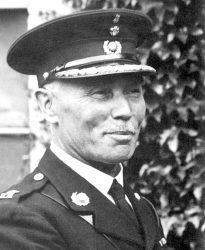
Because of his twenty marches composed for military band, Kenneth J. Alford has sometimes been referred to as ‘The British March King’. His real name was Frederick Joseph Ricketts, and he adopted a pseudonym (based on his eldest son’s Christian name and his mother’s maiden name) to distinguish his renown as a composer from his career as a military musician.
Born in London’s East End in 1881 – and within the sound of Bow bells, thus a true Cockney – Ricketts’ career began in 1895 as a band boy with the Royal Irish Regiment. Following training at Kneller Hall he went on to become bandmaster for the Argyll and Southern Highlanders for several years. Always having an aspiration to lead the band of the Royal Marines, an opportunity occurred in 1927 when a successful application resulted in achieving his goal. It was a position he enjoyed until his retirement because of ill health in 1944. He died the following year, having attained the rank of Major in 1942.
Composed in 1908, his first march was The Thin Red Line, but perhaps his best known is Colonel Bogey. Written in 1914, its fame was boosted by being used in the 1957 film, The Bridge on the River Kwai. His On the Quarterdeck dates from 1917 and commemorates the naval Battle of Jutland that took place in the previous year. Kenneth Alford continued to produce marches throughout the 1920s and 30s, with his last original march, Eagle Squadron, being composed in 1942.
Thanks to John Mitchell for writing this biography.
| Composer | Work | Duration | Published | Price | |||
|---|---|---|---|---|---|---|---|
 | Kenneth J. Alford arr. John Mitchell | On the Quarterdeck for piano duet | 3 mins | 1st September 2025 | £9.50 | ||
| Forces: Piano duet | |||||||